This has been my busiest travel month in a long time, and after this, I'll be home for a while. On Wednesday, I'm off early to Mitel Freedom 2011 - their annual partner/analyst event.
It sure has been an interesting year for Mitel, especially with Don Smith retiring. Am looking forward to meeting his successor, Rich McBee, and getting some in-depth updates on their roadmap, including virtualization. They've been out front on this one, and I'm keen to see how that's fitting into their Freedom initiative. Lots to catch up on, and I'll share what can here and on Twitter.
Tuesday, May 31, 2011

Thursday, May 26, 2011
Connectivity Week - More Photos, Day 3
Yesterday was pretty full, starting with some VC perspectives and then a keynote from the CTO of the United States, Aneesh Chopra. Pretty heady way to start things off, and from there I've been keeping tabs on the wireless panels I put together for the conference. That run started with Ben Boyd's panel on FCC policy issues around wireless networks. He was followed by Berge Ayvazian and the lively public vs. private networks debate. If you weren't there, you missed a good one. The afternoon closed out with Kat Shoa and another big topic - critical communications infrastructure. I did several posts and tweets about Day 3, so I'll keep this short and share some photos. More to come with Day 4 highlights.
Silicon Valley business models roundtable, led by Chris Hickman

Aneesh Chopra, CTO of the United States

Ben Boyd's wireless policy panel

Berge Ayvazian and the public vs. private networks debate

Kat Shoa's critical communications infrastructure panel

Silicon Valley business models roundtable, led by Chris Hickman

Aneesh Chopra, CTO of the United States

Ben Boyd's wireless policy panel
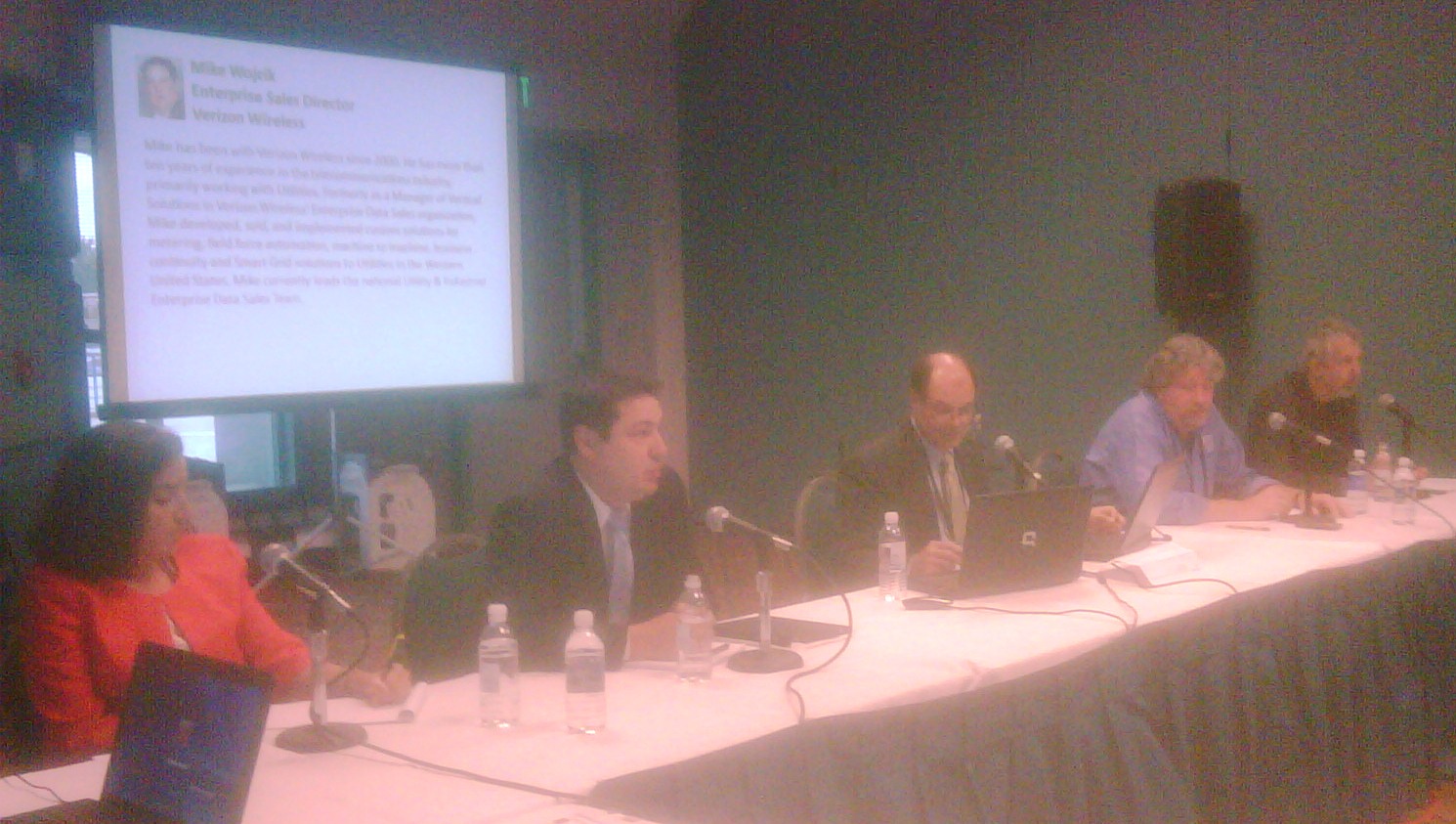
Berge Ayvazian and the public vs. private networks debate

Kat Shoa's critical communications infrastructure panel

Wednesday, May 25, 2011
Zpryme’s New Energy Consumer Report Launched at Connectivity Week
It’s Day 3 here at Connectivity Week, and I’ll be busy running the sessions related to the role of wireless in the smart grid. This isn’t the kind of conference with a lot of news releases or product launches, but there was a launch that I think will be of interest to anyone in smart grid – either on the supply side or as a consumer.
Some of you know that I recently partnered with Zpryme to jointly produce smart grid research, and we launched our first report in March focused on the U.S. renewable energy market. We’d be happy to field your inquiries about this, but let’s come back to the news here.
Zpryme does first rate research, and yesterday their latest study was launched here at Connectivity Week. Not only is it an insightful barometer of what today’s “new energy consumer” looks like, but you can download the report at no cost. The research was underwritten by Itron, but the research is totally market-focused – no vendor pitches here.
To pique your interest, I just wanted to share a few highlights that caught my eye. There is so much to learn about what consumers really think about energy and everything around that, and I’m pretty sure you’ll have a few I-had-no-idea takeways here.
- The report provides a tangible connection between two variables that I think are highly related – the price of gas and electricity. With gas prices jumping so much lately, the research shows that 76.5% of the consumers are now more sensitive to energy prices. They also looked at a sub-set of the sample, which they call High Tech Users (HTUs), and among them, this sensitivity is notably higher – 92.2%.
- That said, there are several data points that show a true lack of knowledge and engagement around energy and smart grid issues:
-- 39.3% are not aware of what smart grid is
-- 48.2% are not interested in an EV- electric vehicle
-- 45.2% don’t know what type of electricity meter they have
-- 21% spend less than a minute reviewing their utility bills, and 48% spend less than 3 minutes - wow!
Clearly, utilities have a huge job ahead of them, and this report is a great resource to better understand what needs to be done.
- On the network and infrastructure side of things, the research also quantifies some promising growth prospects:
-- The U.S. smart grid communications network equipment market was $735M in 2010, and will grow to $1.6B by 2015 – that’s a healthy 17% CAGR
-- The mix of spending is roughly 65% for wired equipment, and 35% for wireless
-- Supporting the wireless opportunity, the research shows that 53.1% indicated that they would be comfortable with their utility working with a cellular provider such as AT&T, Sprint or Verizon.
There's plenty more to explore, and I encourage you to get the report and see for yourself. We all know the opportunity here is huge, but it won't happen unless you understand what's on the consumer's mind.
Some of you know that I recently partnered with Zpryme to jointly produce smart grid research, and we launched our first report in March focused on the U.S. renewable energy market. We’d be happy to field your inquiries about this, but let’s come back to the news here.
Zpryme does first rate research, and yesterday their latest study was launched here at Connectivity Week. Not only is it an insightful barometer of what today’s “new energy consumer” looks like, but you can download the report at no cost. The research was underwritten by Itron, but the research is totally market-focused – no vendor pitches here.
To pique your interest, I just wanted to share a few highlights that caught my eye. There is so much to learn about what consumers really think about energy and everything around that, and I’m pretty sure you’ll have a few I-had-no-idea takeways here.
- The report provides a tangible connection between two variables that I think are highly related – the price of gas and electricity. With gas prices jumping so much lately, the research shows that 76.5% of the consumers are now more sensitive to energy prices. They also looked at a sub-set of the sample, which they call High Tech Users (HTUs), and among them, this sensitivity is notably higher – 92.2%.
- That said, there are several data points that show a true lack of knowledge and engagement around energy and smart grid issues:
-- 39.3% are not aware of what smart grid is
-- 48.2% are not interested in an EV- electric vehicle
-- 45.2% don’t know what type of electricity meter they have
-- 21% spend less than a minute reviewing their utility bills, and 48% spend less than 3 minutes - wow!
Clearly, utilities have a huge job ahead of them, and this report is a great resource to better understand what needs to be done.
- On the network and infrastructure side of things, the research also quantifies some promising growth prospects:
-- The U.S. smart grid communications network equipment market was $735M in 2010, and will grow to $1.6B by 2015 – that’s a healthy 17% CAGR
-- The mix of spending is roughly 65% for wired equipment, and 35% for wireless
-- Supporting the wireless opportunity, the research shows that 53.1% indicated that they would be comfortable with their utility working with a cellular provider such as AT&T, Sprint or Verizon.
There's plenty more to explore, and I encourage you to get the report and see for yourself. We all know the opportunity here is huge, but it won't happen unless you understand what's on the consumer's mind.
Tuesday, May 24, 2011
Connectivity Week - Takeaways so far and Photo Highlights
Am tweeting and blogging as time allows here at Connectivity Week. Sessions are well underway here, and so far, the program has been great. Yesterday we had a full day with Judith Schwartz's Consumer Symposium, followed later by a very engaging keynote from Geoffrey Moore (Crossing the Chasm), and provided broader context around how difficult it is for utilities to make the transformational moves related to smart grid.
This morning has been more of the same with an interactive panel focused on a major theme of the conference - defining the value proposition for smart grid. Lots of different views here, especially with speakers from India and Japan.
This was followed by a keynote from Mickey McManus of MAYA Design. His point of view was far more organic and was as thought-provoking as anything I've seen at eComm. In short, he posed the question for utilities regarding how they would manage all the information that would flood into their networks if smart grid was wildly successful. Phew. For guidance, he turned to nature, and gave a fascinating perspective as to how information is collected and managed for all life forms, including humans. You had to be here to connect the dots - I'm still trying to get my head around this.
Enough for now. I'm currently sitting in on the V2G - vehicle-to-grid panel. This is the kind of stuff that leads people like me to agree with the idea that EVs are the killer app for smart grid. Potentially, it has the biggest impact on home energy use, and is something most of us think about and use every day. As gas prices keep climbing, the EV storyline gets stronger. This session, however, is a good example of the practical challenges - storage, battery life, driving range, charging stations, reverse energy flows, regulations, auto maker priorities, etc. - that need to be coordinated and addressed before EV's can be mainstream. Bottom line - we need more pilots, and don't worry if some of them fail.

Judith's symposium and after panel


Mr. Clasma, Anto Budiardjo

Geoffrey Moore

Day 2 opening panel - the smart grid value proposition

Mickey McManus

Vehicle-to-grid session

This morning has been more of the same with an interactive panel focused on a major theme of the conference - defining the value proposition for smart grid. Lots of different views here, especially with speakers from India and Japan.
This was followed by a keynote from Mickey McManus of MAYA Design. His point of view was far more organic and was as thought-provoking as anything I've seen at eComm. In short, he posed the question for utilities regarding how they would manage all the information that would flood into their networks if smart grid was wildly successful. Phew. For guidance, he turned to nature, and gave a fascinating perspective as to how information is collected and managed for all life forms, including humans. You had to be here to connect the dots - I'm still trying to get my head around this.
Enough for now. I'm currently sitting in on the V2G - vehicle-to-grid panel. This is the kind of stuff that leads people like me to agree with the idea that EVs are the killer app for smart grid. Potentially, it has the biggest impact on home energy use, and is something most of us think about and use every day. As gas prices keep climbing, the EV storyline gets stronger. This session, however, is a good example of the practical challenges - storage, battery life, driving range, charging stations, reverse energy flows, regulations, auto maker priorities, etc. - that need to be coordinated and addressed before EV's can be mainstream. Bottom line - we need more pilots, and don't worry if some of them fail.

Judith's symposium and after panel


Mr. Clasma, Anto Budiardjo

Geoffrey Moore

Day 2 opening panel - the smart grid value proposition

Mickey McManus

Vehicle-to-grid session

Monday, May 23, 2011
Connectivity Week, Day 1 - Smart Meter Consumer Symposium
The Day 1 focus to this point at Connectivity Week has been smart meters. It's one of my favorite topics in this space, and I'll be moderating a panel about it later in the week. This day-long session is a consumer symposium exploring various facets around smart meters.
This symposium is really covering the gamut with speakers/experts from across the whole spectrum, including utilities and the press. It's a great way to explore a pretty touchy topic, especially here in California, where the biggest utility, Pacific Gas & Electric has come under a lot of fire for how they've handled their smart meter rollout.
Lots to explore here - issues of privacy, data security, consumer perceptions, health concerns, pricing issues, etc. Bottom line, consumers really don't understand what smart meters are and why they're being installed without much input from them. Can you blame them? Utilities are not customer-centric by nature, and there's a real disconnect between their motives for deploying smart grids, and why consumers should welcome them. The more you talk about this, the more issues come up, and it's quickly apparent that a lot of things need to go right for this to be a win-win.
In short, it's a trust issue. Consumers haven't had much reason to trust utilities, and so far, smart meter roll outs haven't done much to change that. On the other hand, when you have intelligent discussion happening - as we're having here - consumers definitely get it, and if you make them equal partners, the odds of success go way up. Privacy is definitely a bedrock issue, but it's confounding when you look at how readily people share private information when using social media. As such, there isn't a straight line path here - am sure it will be a lot of zigs and zags, but I think we will get there.
Enough for now - back to work...
This symposium is really covering the gamut with speakers/experts from across the whole spectrum, including utilities and the press. It's a great way to explore a pretty touchy topic, especially here in California, where the biggest utility, Pacific Gas & Electric has come under a lot of fire for how they've handled their smart meter rollout.
Lots to explore here - issues of privacy, data security, consumer perceptions, health concerns, pricing issues, etc. Bottom line, consumers really don't understand what smart meters are and why they're being installed without much input from them. Can you blame them? Utilities are not customer-centric by nature, and there's a real disconnect between their motives for deploying smart grids, and why consumers should welcome them. The more you talk about this, the more issues come up, and it's quickly apparent that a lot of things need to go right for this to be a win-win.
In short, it's a trust issue. Consumers haven't had much reason to trust utilities, and so far, smart meter roll outs haven't done much to change that. On the other hand, when you have intelligent discussion happening - as we're having here - consumers definitely get it, and if you make them equal partners, the odds of success go way up. Privacy is definitely a bedrock issue, but it's confounding when you look at how readily people share private information when using social media. As such, there isn't a straight line path here - am sure it will be a lot of zigs and zags, but I think we will get there.
Enough for now - back to work...
Friday, May 20, 2011
Next Stop - Santa Clara and Connectivity Week
All next week, I'll be in sunny Santa Clara for Connectivity Week - whoo hoo! Sure will be a great show, and I'm happy to be part of it. I've been blogging and tweeting about it pretty regularly, and if want to see what I'll be doing out there, it's all in my post from earlier this week.
If you're out that way and want to get in touch, I'm not hard to find.
If you're out that way and want to get in touch, I'm not hard to find.
Thursday, May 19, 2011
UCStrategies Podcast - the Future for Service Providers
This week's UCStrategies podcast was about the future for service providers, especially incumbents. I've been keen on this topic for years, and still believe that the service provider of the future has yet to emerge.
Anyhow, Russell Bennett did a great job pulling this together, and I enjoyed being part of it. The podcast has just been uploaded to the UCS portal, and you can give it a listen any time. Enjoy!
Anyhow, Russell Bennett did a great job pulling this together, and I enjoyed being part of it. The podcast has just been uploaded to the UCS portal, and you can give it a listen any time. Enjoy!
Subscribe to:
Posts (Atom)


 RSS Feed